Style AI
CLIENT
Style AI
YEAR
2024
SCOPE
UX/UI Design · Mobile App · AI Product
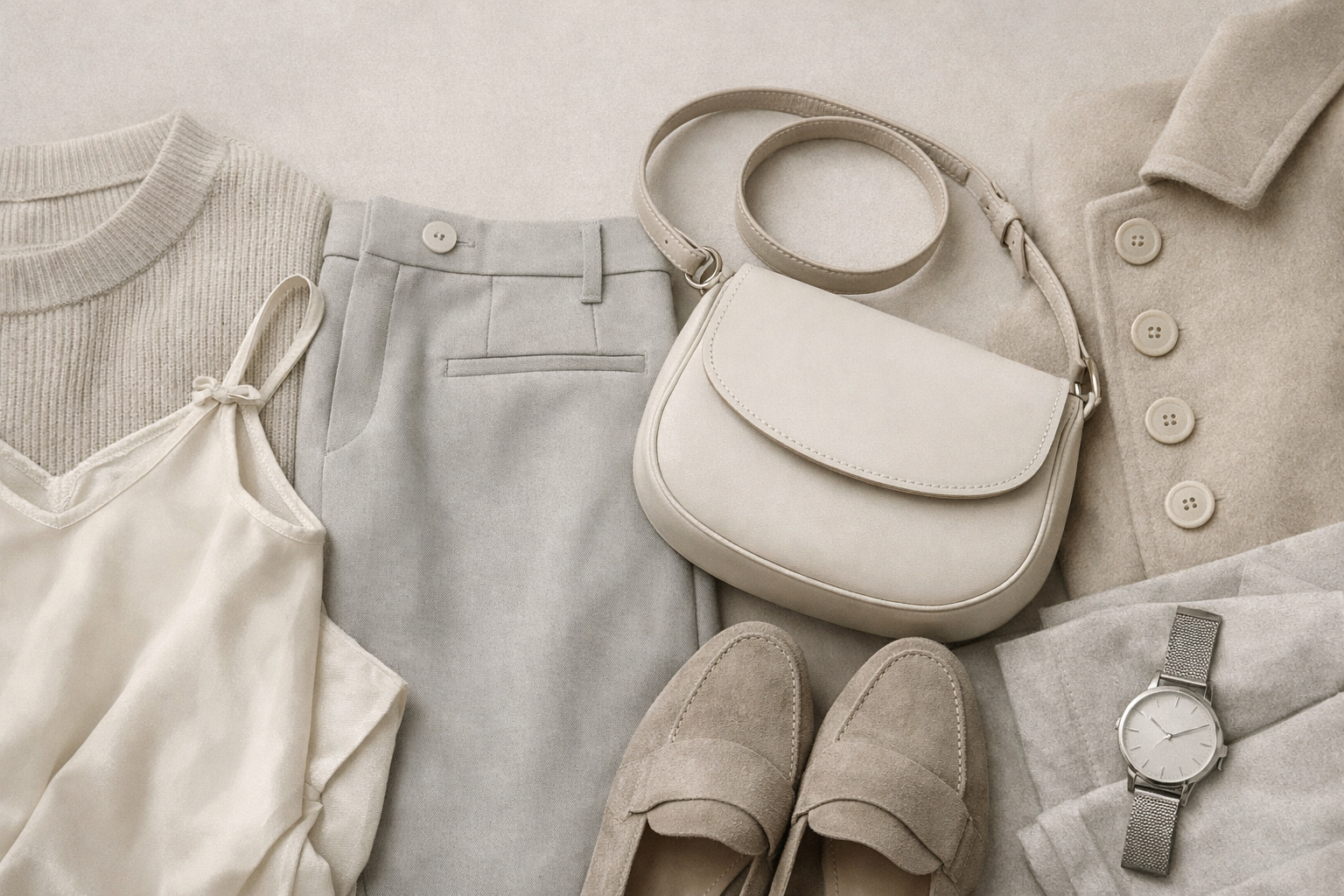
Most people own enough clothes.
They just can't see it.
The brief was to design an AI-driven mobile app that simplifies outfit planning and improves shopping decisions, not by adding more to the wardrobe, but by making better use of what already exists. The target was everyday users who shop monthly but wear the same handful of outfits.
The core problem wasn't a lack of clothes. It was a lack of visibility and confidence. People struggle to create outfits efficiently, underestimate the range of their existing wardrobe, and default to buying something new when they feel stuck. A smarter, more intuitive tool was the solution.
The design challenge was making AI feel like a helpful friend, not a feature list. The app needed to guide users naturally through cataloguing, outfit building, and styling decisions, with as little friction as possible at every step.
Understanding how people
actually get dressed.
User research with participants aged 18–45 surfaced a consistent pattern: 65% shop monthly but don't maximise their existing wardrobe, and 55% struggle with outfit creation despite owning plenty of clothes. The pain wasn't quantity. It was organisation and confidence.
People want personalised guidance, but they don't want to work hard for it. The effort of cataloguing a wardrobe, filtering by occasion, and cross-referencing the weather is exactly what prevents most users from engaging with existing tools. The research made it clear that the app had to do more of the thinking.
On the market side, AI-powered personal styling remains a largely unsolved problem. Demand for sustainable fashion choices is growing, and interest in personalised shopping experiences is rising, but very few products had successfully bridged the gap between AI capability and everyday usability. That gap was the opportunity.
Removing friction
at every decision point.
The user journey was mapped from first open to habitual daily use. Onboarding was streamlined into a style quiz that gathered preferences without feeling like a form. Wardrobe digitisation was made as quick as possible: the fewer taps between a user and a catalogued item, the more likely they are to actually do it.
The interface was built on a clean, minimalist design language with intuitive navigation patterns and a clear visual hierarchy that surfaces the most useful features first. Accessible and inclusive design principles were applied throughout, ensuring the app worked for a broad range of users without compromise.
Social and community features were woven into the experience rather than bolted on. Sharing outfits and receiving feedback sits naturally within the same flows as outfit generation, making the social layer feel like a natural extension of the styling experience, not a separate product.
Four systems working
as one experience.
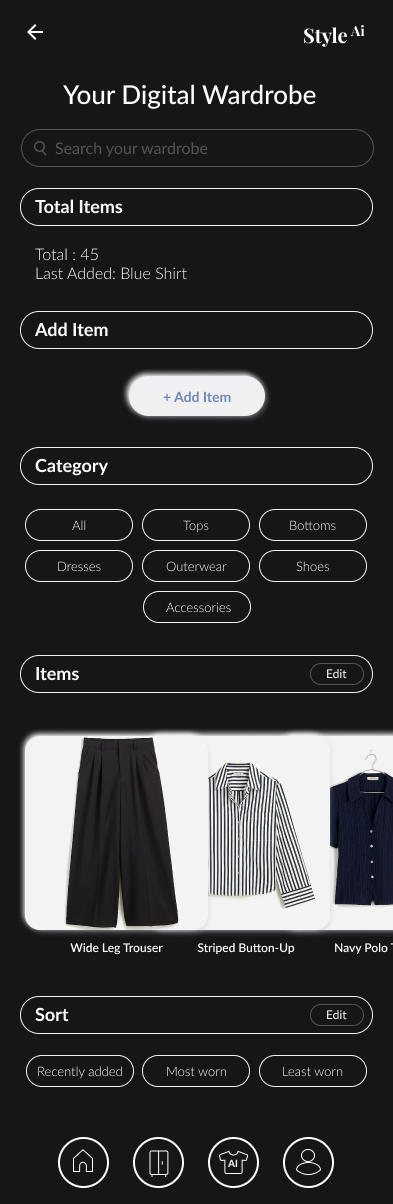
The app is built around four interconnected systems. A simple digital wardrobe lets users catalogue and visualise everything they own, designed to be fast enough that adding a new item never becomes a task in itself. From there, the AI generates personalised outfit suggestions based on style preferences, occasion, and weather, surfacing combinations users wouldn't have reached on their own.
A style community layer adds a social dimension: users can share outfits and gather feedback from other fashion enthusiasts, creating a loop of discovery and validation that keeps the experience feeling alive. Underpinning all of it is a personalised style journey: recommendations that evolve over time, learning from choices and continuously refining the picture of who each user is.
Together, these four systems work as a single coherent experience rather than a set of disconnected features. The goal was for users to move fluidly between them, from cataloguing to generating to sharing to discovering, without ever feeling like they'd changed modes.
THE SCREENS
From first open to
confident daily use.
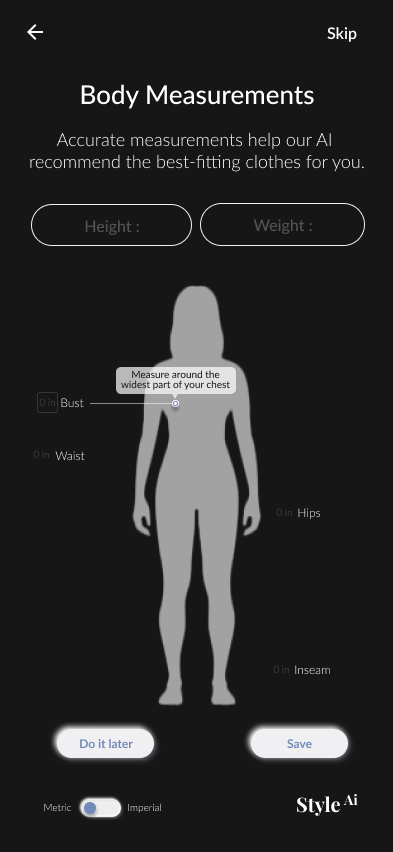
The experience was designed as a journey with five clear stages. Onboarding walks users through a style quiz and captures measurements, so the AI has what it needs to make personalised recommendations from the very first session.
Wardrobe management comes next, where users digitise their clothing for tailored outfit ideas. Daily outfit planning then uses that data alongside occasions, weather, and style goals to serve up suggestions that feel considered rather than random.
Social engagement lets users share outfits and receive feedback within the community, deepening their engagement with the app beyond solo use. Advanced features, including an AI chatbot for styling advice, build confidence over time and keep experienced users invested in the product.
OUTCOME
Developed an intuitive styling assistant that combines AI with user-friendly features to help users maximise their wardrobes and make more informed fashion choices.
NEXT PROJECT
Fortuna Insights→